
If you are a US‑based hair distributor/wholesaler, beauty‑supply store or salon owner sourcing bulk human hair extensions and wigs, you have definitely run across three common terms: raw hair, virgin hair and remy hair. Misunderstanding these definitions will lead you to place wrong bulk orders, receive inconsistent hair stock, and lose profits from your retail and salon clients.
Many new wholesale buyers from the United States mix‑up these hair grades. Some hair vendors misuse these marketing labels to over‑sell processed hair as premium raw human hair. This guide breaks down the core differences, real‑world use‑cases, and practical buying tips for US B2B purchasers.
Key Hair Buying Tips for Distinguishing Core Human Hair Grades
What Is Remy Human Hair?
Remy hair is the most widely‑available grade for mainstream US hair wholesale markets. The core feature of remy hair is cuticles kept uni‑directional, meaning all hair cuticles flow in the same root‑to‑tip orientation.
Remy hair does not mean unprocessed hair. Most remy hair on the wholesale market has gone through chemical washing, steaming, dyeing or texture re‑processing. Vendors can take mixed‑source hair, align cuticles mechanically, and sell it as remy bundles.
Who should buy remy hair for US market?
- Mid‑range beauty‑supply store inventory
- Budget‑friendly tape‑in extensions, machine wefts and entry‑level bundles
- Buyers looking for affordable large‑volume stock with competitive retail price points
What Is Virgin Human Hair?
Virgin hair is 100% human hair that has never received any chemical dye, bleach or perm treatment from the original donor. However, it can still go through factory‑level steaming to create textures such as body wave, deep wave or yaki texture.
Key point to note: Virgin hair can be collected from multiple donors. Multi‑donor virgin hair is very common within US wholesale supply chains. It keeps original cuticle integrity, yet strands come from several different people.
Best‑fit scenarios for virgin hair wholesale purchasing:
- Mid‑to‑high‑end salon hair bundles and wig units
- Distributors targeting clients who want natural texture with stable quality
- Stock for customers who want to re‑dye hair products locally inside US salons
What Is Raw Human Hair?
Raw hair, also known as raw unprocessed hair, represents the top tier of human hair in the B2B marketplace. It comes from a donor, with zero chemical processing of any kind. No steaming, no bleaching, no factory dye work.
Raw hair can be single‑donor raw hair or multi‑donor raw hair. Single donor raw hair means all strands come from one single person, which is highly sought‑after by high‑end US luxury salons and private‑label wig brands.
Popular origins US buyers frequently source include Vietnamese raw hair, Indian raw hair, and Chinese raw hair. Each origin carries distinct natural textures: Vietnamese raw hair is silky and smooth, very shiny, but hold curl not very well; Indian raw hair features softer natural wavy patterns, but individual is thin, not last long; Chinese raw hair is thick and endurable, most new inventor take it tough, but it’s the best quality among China hair market. The real black gold for coloring, balayaging and time lasting.
Raw hair’s biggest advantage for American bulk buyers: unlimited custom coloring capability. Salon stylists can bleach it to #613 blonde and create custom dimensional brown shades without heavy hair damage.
Who should invest in raw hair bulk orders:
- Luxury salons offering custom wig and bundle services
- Luxury human hair brands in the US
- High‑end beauty supply stores serving clientele pursuing premium hair quality
- Celebrity hairstylist
Side‑by‑Side Comparison Table For US Wholesale Buyers
| Hair Grade | Chemical‑Free Origin | Cuticle Alignment | Typical US Market Price Level | Common Product Forms |
|---|---|---|---|---|
| Remy Hair |  Chemically processed Chemically processed |
 Cuticles aligned Cuticles aligned |
Budget‑mid | Bundles, tape‑in, wefts, wigs, lace closures |
| Virgin Hair | No donor chemical treatment; factory steaming allowed |
Cuticles intact |
Mid‑high | Bundles, lace wigs, lace closures, tapes, clips, tips etc. |
| Raw Hair | Zero chemical processing at all |
Full original cuticle |
Premium | Raw bundles, custom‑order wigs, hd lace closures |
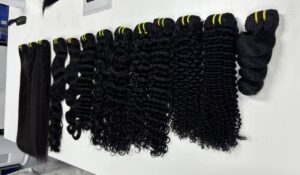
Verify Vendor Qualifications & Real Cases
Clarify MOQ, Lead Time & Shipping Rules
Identify Common Vendor Marketing Red Flags
Must-Know Hair Buying Tips for Sample Testing
-
Cuticle resistance test: Gently stroke the hair strands from the tip to the root. Obvious stuttering and resistance indicate complete cuticle alignment and non-reversed cuticles, effectively avoiding tangling problems.
-
Washing & shedding test: Wash the sample hair repeatedly with warm water to observe shedding volume and luster changes. High-quality wholesale hair will not shed massively or lose luster after multiple cleanings.
-
Bleaching & dyeing test: For raw hair and virgin hair used for custom color services, conduct a small-area bleaching test to verify color rendering effect and hair toughness, ensuring it meets US salon custom service standards.
-
Texture restoration test: After wetting and air-drying the hair, check whether the curl pattern and texture can be restored naturally, to avoid inconsistent batch textures of bulk inventory.
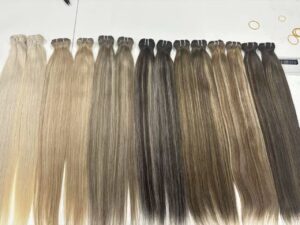
How To Choose The Right Hair Grade For Your US Business
Your inventory decision depends entirely on your target customer base, profit margin goals and local market demand.
- If you run a community beauty‑supply store catering to mass retail customers: Prioritize high‑quality remy hair and multi‑donor virgin hair. These deliver solid performance while keeping your wholesale cost reasonable.
- If you own a full‑service hair salon offering extensions and custom wig installs: Mix virgin hair for regular stock and keep small‑volume raw hair samples for high‑budget clients requesting custom color services.
- If you operate a luxury private‑label hair brand targeting high‑end US consumers: Focus on Vietnamese, Indian or Chinese raw hair, and clearly communicate product specifications to your end customers.
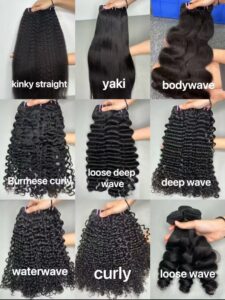
Final Takeaway
Raw hair, virgin hair and remy hair are not “better or worse” in absolute terms. They fit different business models within the US human hair wholesale industry.
There is no universal best grade. The wisest buying strategy is matching hair grades to your customer demands, instead of blindly chasing the highest‑priced raw hair for every order. Clarify your product specifications with your hair vendor, and avoid overpaying for mis‑labelled hair inventory.
Contact us for more wholesale inforamtion. Thanks!